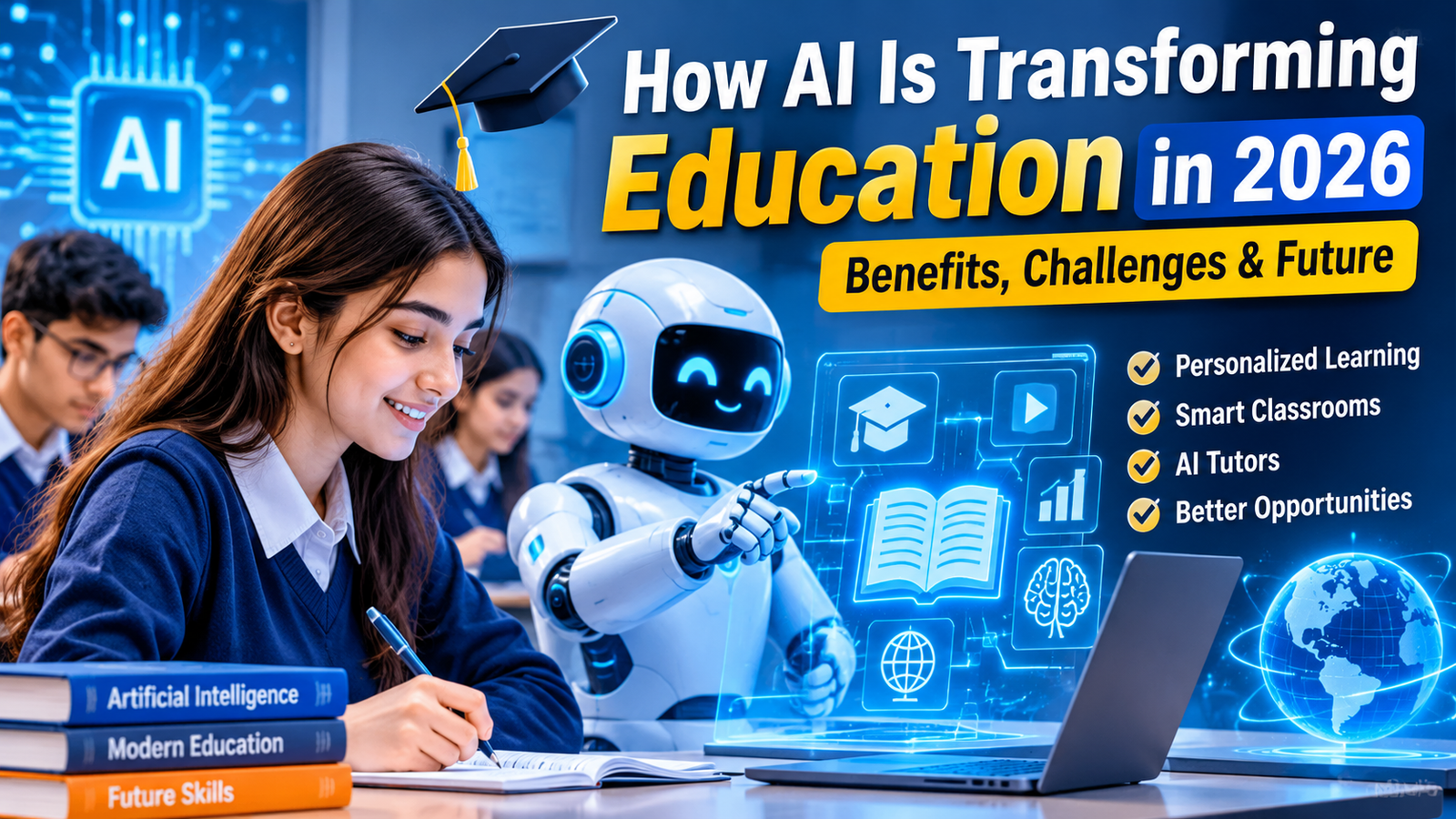
Meta Title: How AI Is Transforming Education in 2026: Benefits, Challenges & Future
Meta Description: Discover how artificial intelligence is transforming education in 2026 through personalized learning, smart classrooms, AI tutors, and innovative teaching methods.
Focus Keyword: AI in Education 2026
Introduction
Artificial Intelligence (AI) is changing the way people learn, teach, and access information. In 2026, technology has become an important part of modern education, helping students understand difficult subjects, complete learning activities, and improve their academic performance.
Traditional classrooms are gradually evolving into smarter learning environments where AI-powered tools support both teachers and students. From personalized learning platforms to virtual tutors, artificial intelligence is making education more accessible, flexible, and interactive.
But how exactly is AI transforming education in 2026? Let’s explore its major benefits, applications, challenges, and future possibilities.
1. Personalized Learning for Every Student
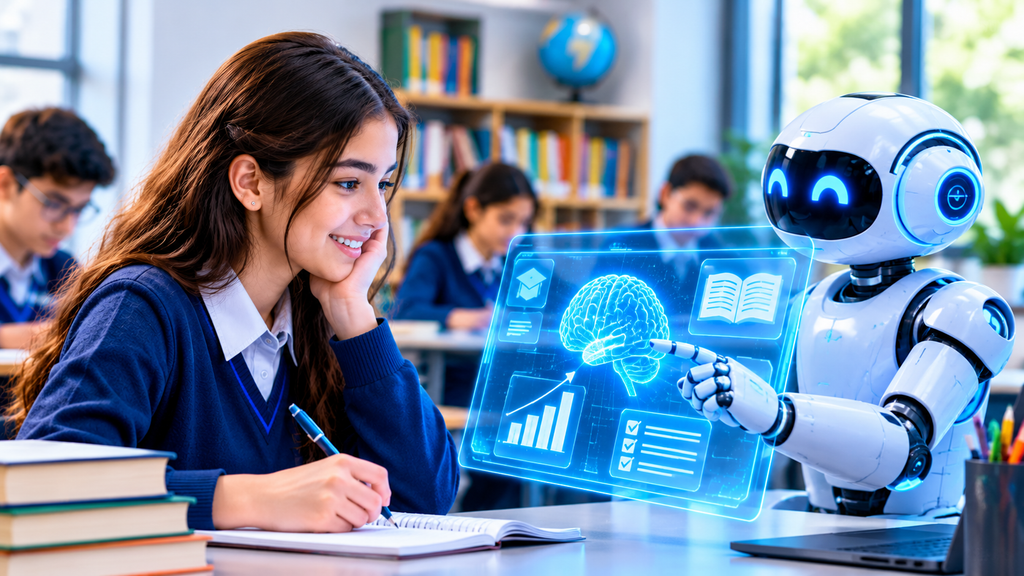
One of the biggest advantages of AI in education is personalized learning.
Every student has a different learning speed, ability, and understanding level. Traditional teaching methods often make it difficult for teachers to provide individual attention to every student.
AI-powered learning platforms can analyze a student’s performance, identify weaknesses, and recommend lessons based on individual needs.
For example, if a student struggles with mathematics, an AI learning tool can provide additional exercises, step-by-step explanations, and practice questions.
This approach allows students to learn at their own pace and build confidence in subjects they find difficult.
2. AI-Powered Virtual Tutors
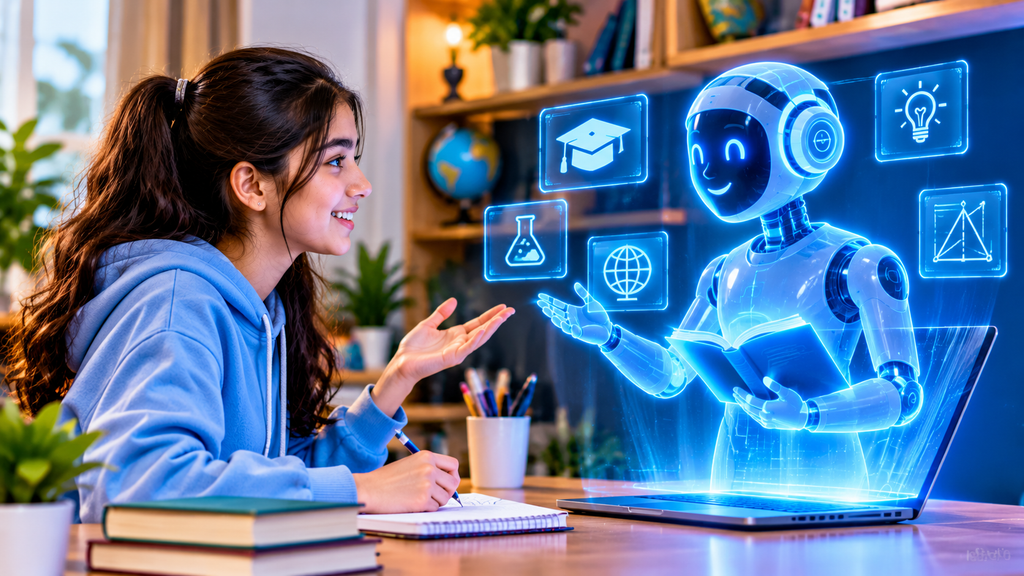
AI virtual tutors are becoming valuable learning assistants for students.
These tools can explain complex topics, answer questions, summarize lessons, and provide practice exercises. Students can use them whenever they need additional support outside the classroom.
Unlike traditional tutoring, AI-powered assistants are often available at any time, making learning more flexible.
For example, students can use AI tools such as ChatGPT to understand difficult science concepts, practice English grammar, or get explanations of mathematical problems.
However, students should always verify important information rather than accepting every AI-generated answer without checking it.
3. Making Teachers More Productive
Artificial intelligence is not only helping students; it is also making teachers’ work easier.
Teachers spend considerable time preparing lesson plans, creating quizzes, checking assignments, and organizing educational materials.
AI tools can assist with many of these activities, allowing teachers to focus more on teaching and interacting with students.
Some useful applications include:
- Creating lesson plans and classroom activities.
- Generating quizzes and practice questions.
- Preparing presentations and study materials.
- Providing initial feedback on student assignments.
- Organizing educational resources.
AI does not replace the experience, creativity, or emotional understanding of teachers. Instead, it can support them in creating better learning experiences.
4. Smart Classrooms and Interactive Learning
Modern classrooms are becoming more interactive with the help of artificial intelligence and digital technology.
Smart learning platforms can provide interactive exercises, educational videos, simulations, and instant feedback.
For example, students studying biology can explore virtual models of the human body, while physics students can use digital simulations to understand scientific experiments.
These learning experiences make difficult concepts easier to understand and encourage students to participate actively.
As educational technology continues to develop, smart classrooms may become increasingly common in schools, colleges, and universities.
5. Breaking Language Barriers in Education
Language should not prevent students from accessing quality education.
AI-powered translation and language-learning tools are helping students understand educational content in different languages.
For example, a student who finds English difficult may use AI tools to translate explanations, understand unfamiliar vocabulary, or practice speaking and writing.
This can be particularly helpful for students in countries where English is not the first language.
AI can also support students with disabilities through speech-to-text tools, text-to-speech technology, and other accessibility features.
As a result, digital education is becoming more inclusive and accessible to a wider audience.
6. AI Tools Students Can Use in 2026
Several AI-powered tools can help students improve their learning experience.
ChatGPT: Helps students understand concepts, generate ideas, practice writing, and explore different subjects.
Google Gemini: Supports research, explanations, brainstorming, and learning activities.
Grammarly: Helps improve grammar, spelling, clarity, and writing style.
Khan Academy’s Khanmigo: Provides AI-supported educational guidance and tutoring experiences.
Quizlet: Offers digital study tools, flashcards, and AI-supported learning features.
These tools can make studying more organized and productive when students use them responsibly.
7. Challenges of Using AI in Education
Although AI offers many advantages, it also creates important challenges.
Overdependence on Technology: Some students may become too dependent on AI tools instead of developing their own problem-solving and critical-thinking skills.
Incorrect Information: AI systems can sometimes generate inaccurate or misleading answers. Students should verify information using reliable educational sources.
Academic Dishonesty: Submitting AI-generated assignments as original work can reduce genuine learning and create academic integrity problems.
Data Privacy: Educational platforms may collect personal information and learning data. Schools and students should understand how this information is stored and used.
Digital Inequality: Not every student has access to reliable internet, computers, or modern devices. This can create differences in educational opportunities.
Addressing these challenges is essential to ensuring that AI benefits students fairly and responsibly.
8. The Future of AI in Education
The future of education will likely involve greater cooperation between teachers, students, and artificial intelligence.
AI-powered platforms may become better at understanding individual learning needs, identifying knowledge gaps, and recommending suitable educational resources.
Virtual learning environments, intelligent tutoring systems, and advanced accessibility tools may also create new opportunities for students around the world.
However, technology alone cannot create a successful education system. Human teachers, creativity, communication, critical thinking, and practical experience will remain essential.
The most effective educational approach will combine the strengths of artificial intelligence with human guidance.
Conclusion
Artificial Intelligence is transforming education in 2026 by making learning more personalized, interactive, and accessible. From virtual tutors and smart classrooms to automated learning assistance, AI is creating new opportunities for both students and teachers.
Despite challenges such as inaccurate information, privacy concerns, and overdependence on technology, its potential benefits are significant.
AI should be viewed as a learning assistant rather than a replacement for teachers or independent thinking. When used responsibly, it can help create a smarter and more inclusive educational future.
The future of education is not about choosing between humans and AI. It is about bringing them together to make learning better for everyone.